Last updated: 2026
Knowing how many calories to lose weight is one of the most common — and most confusing — questions when trying to shed fat.
Many people look for a single number they can follow, but the truth is that calorie needs vary from person to person. Factors like age, height, weight, activity level, and lifestyle all influence how many calories your body needs to lose weight safely and effectively.
This guide explains how calorie targets work, why there isn’t one perfect number for everyone, and how to find a calorie intake you can realistically maintain. You can also use the calorie calculator below to estimate your daily needs and adjust them based on your goals.
Weight Loss Calorie Calculator
This calculator provides an estimate of how many calories your body needs each day based on your age, height, weight, gender, and activity level. The result is meant to give you a starting point, not a fixed rule.
How to Use This Calorie Calculator
Use the estimated calorie range as a guide and pay attention to how your body responds over time. Energy levels, hunger, and consistency matter just as much as the number itself. If the suggested intake feels too difficult to maintain, small adjustments often lead to better long-term results.
Calorie Calculator for Weight Loss
This calculator provides an estimate. Individual calorie needs may vary.
Why There Is No Single “Perfect” Calorie Number
It’s tempting to look for one exact calorie number that guarantees weight loss. In reality, calorie needs are not fixed — they change based on how your body responds, not just what a formula predicts.
Two people with the same height and weight can eat the same number of calories and see very different results. This happens because factors like daily movement, metabolism, sleep quality, stress levels, and past dieting history all influence how the body uses energy.
Calorie calculators provide an estimate, not a rule. They help set a starting point, but real progress comes from observing how your body responds over time. If energy levels crash, hunger becomes unmanageable, or weight loss stalls quickly, the number often needs adjustment.
This is why successful weight loss is not about finding the lowest calorie intake possible. It’s about finding a calorie range you can maintain consistently while still allowing fat loss to occur.
Understanding this early prevents frustration and helps you use calorie tracking as a guide — not a rigid command.
Calorie targets are often discussed without context, which leads to confusion and unrealistic expectations. Calories matter for fat loss only because they represent energy balance over time. The biological explanation behind this process is covered in detail in our guide on how fat loss works.
How Calorie Deficits Actually Work in Real Life
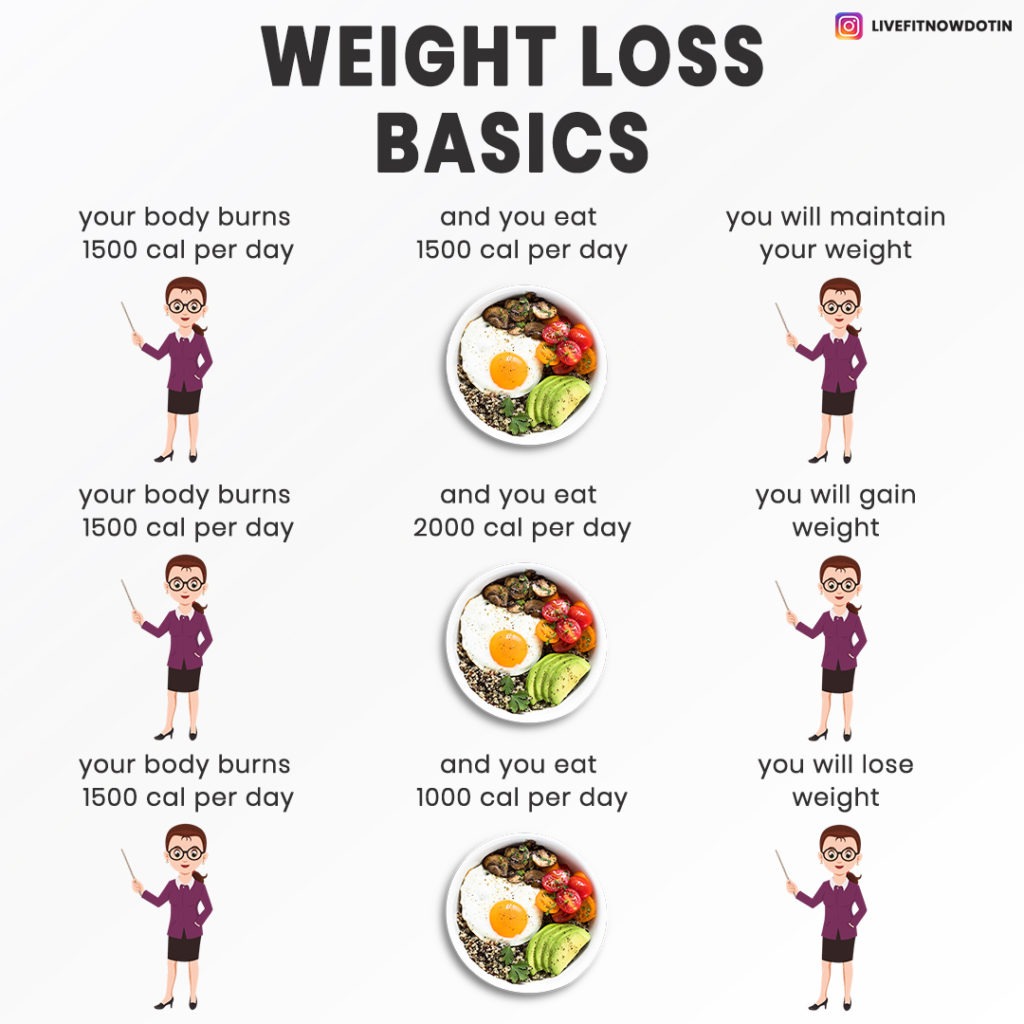
Calorie deficit examples are often used to explain weight loss because they make the concept easier to understand. However, these examples are best viewed as approximations, not guarantees.
The body does not respond to calorie changes in a perfectly linear way. Energy needs can shift as weight changes, activity levels vary, and the body adapts over time. This is why two people following the same calorie deficit may experience different rates of weight loss.
Calorie math is useful for setting expectations, but real progress depends on consistency, recovery, and how sustainable the deficit feels day to day. Treat these numbers as a reference point rather than a fixed outcome.
Let’s use an example to better understand this quickly. Let’s say you are a lightly active woman. The above calculator says you need 1500 calories to lose weight and 2000 to maintain weight.
That means you need to eat 500 fewer calories than your maintenance calories, right?
If you subtract 500 calories a day from your diet, it will be 3500 calories a week, and if we do a Lil math, 3500 cal = 1 pound.
That’s how you will lose one pound in a week.
You can also cut 1000 calories per day which is a total of 7000 calories a week. That means losing 2 lbs per week.
But this is not recommended because cutting down so much food is not healthy and sustainable for a long time.
How to count your daily calories for weight loss?
Counting calories is not about tracking every bite perfectly. It’s about becoming aware of how much you’re actually eating and how different foods affect your hunger and energy levels.
Many people underestimate their calorie intake without realizing it, especially when portion sizes and packaged foods are involved. Tracking for a short period helps build awareness, even if you don’t plan to track long term.
Once you understand your eating patterns, calorie counting becomes a tool for guidance — not something you need to rely on forever.
The best, free, and easiest way to count your calories is to use the MyFitnessPal app or the website.
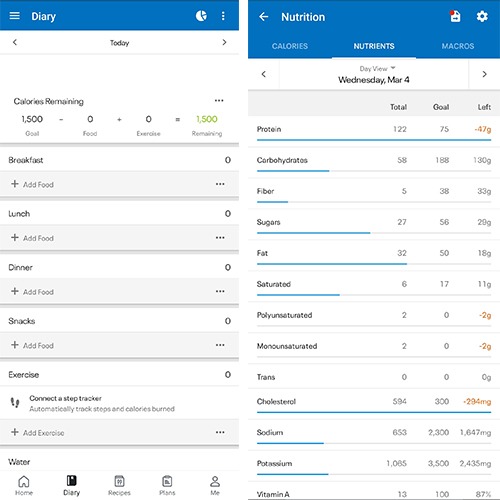
Add the food you eat in the app and it will show you the number of calories in food, calories remaining, and nutrition of each food.
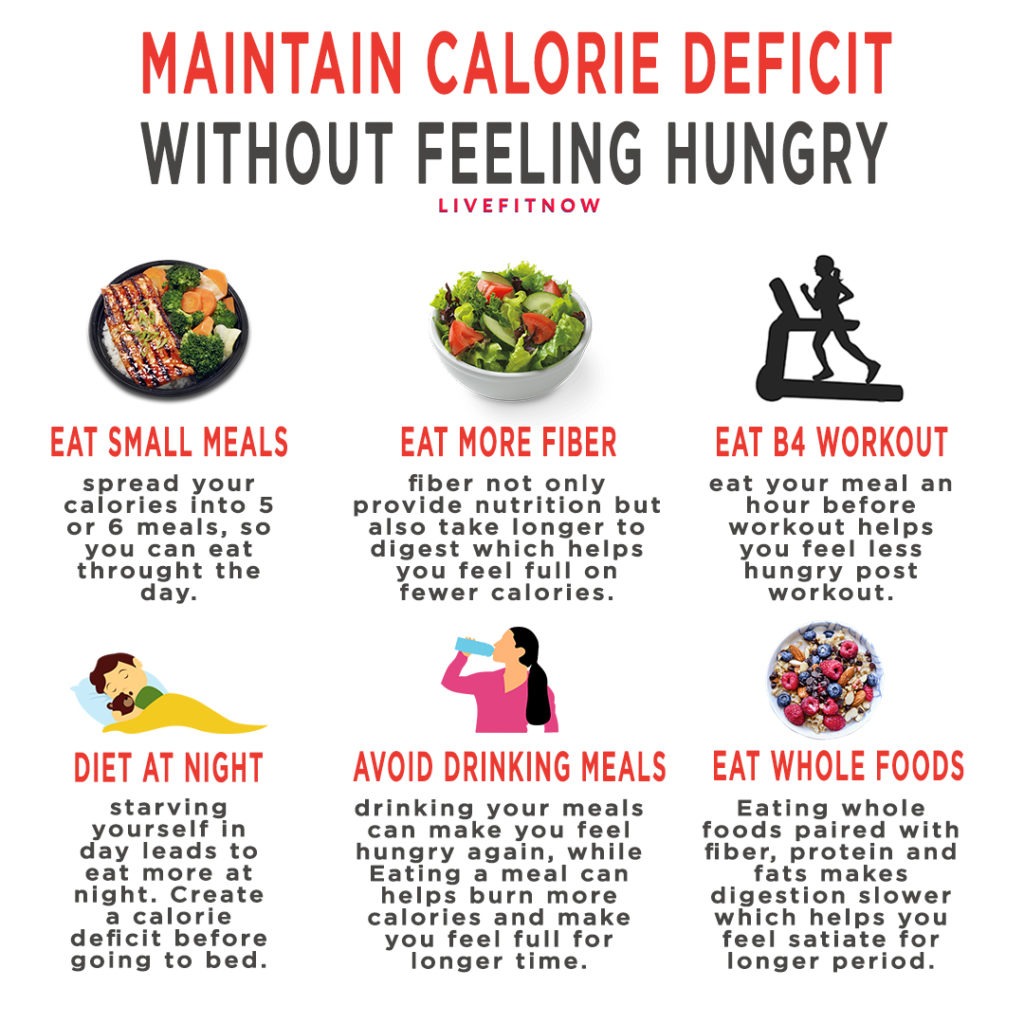
How to cut your calories without feeling hungry?
Hunger during a calorie deficit doesn’t always mean you’re eating too little. In many cases, it’s a sign that food choices, meal timing, or eating habits need adjustment.
Highly processed foods digest quickly and often leave you hungry soon after eating, even if calorie intake seems adequate. On the other hand, meals built around protein, fiber, and whole foods tend to keep you full longer and make a calorie deficit easier to maintain.
Learning how to manage hunger is what allows calorie reduction to work long term. When hunger feels constant or overwhelming, it usually leads to overeating later. The goal isn’t to eliminate hunger completely, but to keep it at a level that feels manageable and predictable.
How to stop eating overeating and lose weight?
The reason most weight-loss diets fail is due to overeating. Many people struggle to lose fat without being starving.
People overeat because they eat foods that are low-nutrient dense or unsatiated which triggers more hunger.
Losing fat is highly depends on the foods choices you make.
Practical ways to stop overeating?
How to stop overeating?
- Eat Whole Grain Foods
Whole-grain foods digest slowly, keep you feeling full for a long time, and provide more nutrient-dense than processed foods.
- Eat More Protein
Every diet is incomplete without protein. Increasing your protein intake can boost metabolism, fight cravings, and significantly reduce appetite. This can lead to automatic weight loss.
- Eat More Fiber
Fiber helps regulate the body’s use of sugars, helping to keep hunger and blood sugar in check which controls overeating and binge eating.
- Eat Slowly
Eating too quickly often leads to overeating, as your brain doesn’t get enough time to receive fullness signals. Eating slowly increases the levels of gut hormones responsible for feeling full, which may help reduce calorie intake and stop you from overeating.
- Eat more fats
Fats are high in calories, contain 9 calories per gram, and digest slowly than carbs which makes you feel full for a long period. That’s why diets like low carbs diets and keto promote high fats because of their calorie content and more satiating nature.
- Eat whole fruits
Watermelon is one such example of whole fruits and high nutrient-dense food relatively low in calories and high in nutrients. You can eat whole eat fruits in larger amount without getting fat and they also help you feel full
- Don’t drink calories
Drinking calories may cause you to gain weight instead of losing it. Many studies shows that you’ll be more likely to feel full after eating if you concentrate on eating your food slowly.
- Avoid simple carbs
Simple carbs promote high insulin levels and digest more quickly which makes you feel hungry again in less time.
- Drink water before eating
Some people may not agree on that but drinking water before eating can make you feel full which controls you from overeating foods.
When a Slower Approach Is the Better Option
While understanding calorie needs can be helpful for weight loss, aggressive calorie reduction is not suitable for everyone.
If cutting calories leads to constant exhaustion, dizziness, loss of concentration, or frequent overeating, it’s often a sign that the deficit is too large or difficult to maintain. In these cases, slowing down and focusing on consistency usually leads to better long-term results.
People with a history of disordered eating, ongoing health concerns, or highly demanding physical routines may benefit from a more gradual approach rather than strict calorie targets.
Calorie numbers are meant to guide decisions, not override how your body feels. Adjusting intake based on energy levels, hunger, and recovery is often more effective than sticking rigidly to a single number.
The Bottom Line
How many calories you need per day to lose weight depends on your body goals such as weight gain or weight loss and many other factors like height, weight, age, and activity level. Calculating and counting calories is the best way to keep on track with your weight loss goal.
By incorporating a well-rounded diet consisting of highly nutritious and low-calorie foods into your lifestyle, you can lose weight without starving yourself.
Calorie targets are most effective when they support habits you can maintain. The goal isn’t perfection, but consistency that allows progress over time.







1 comment
Like!! I blog quite often and I genuinely thank you for your information. The article has truly peaked my interest.
Comments are closed.