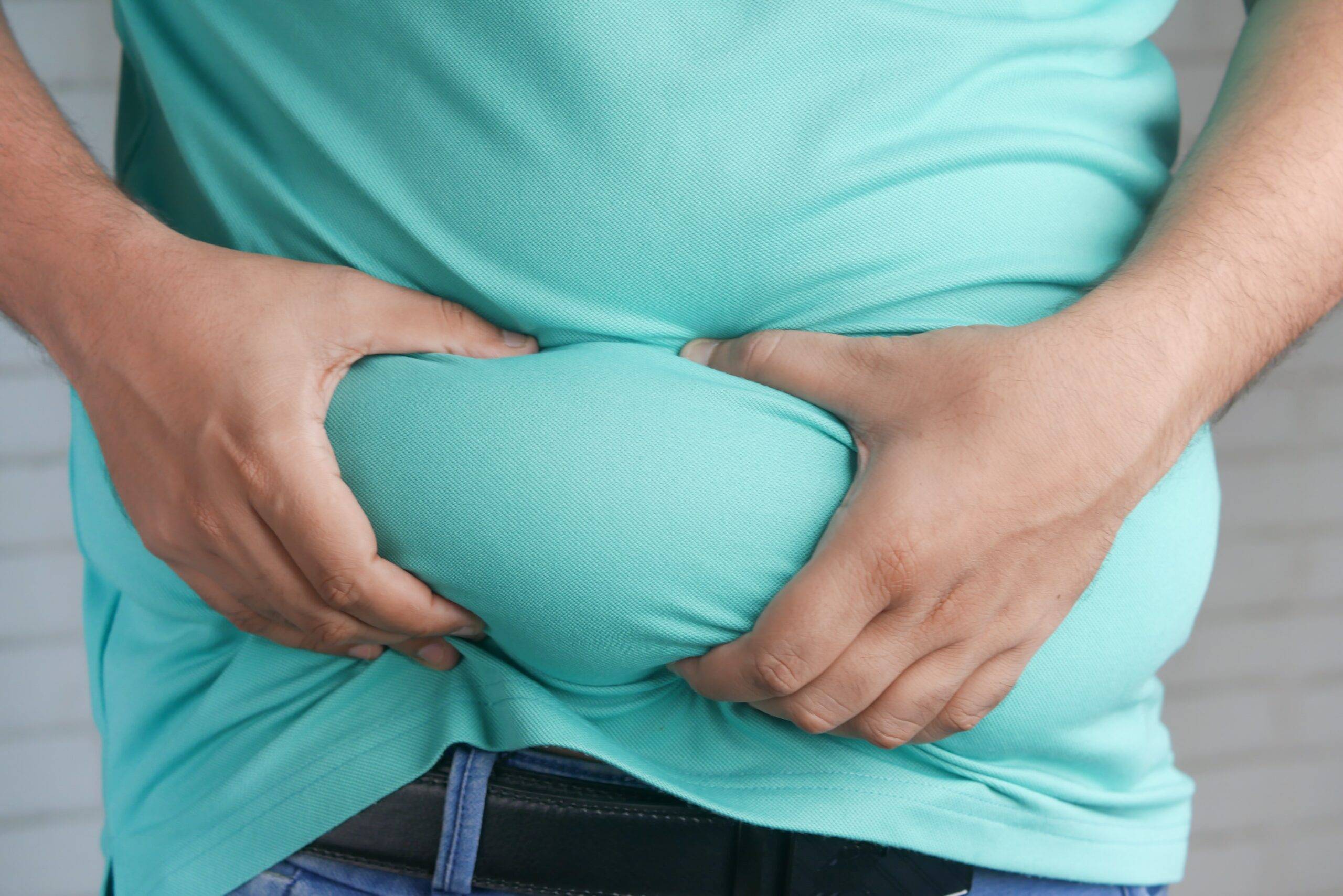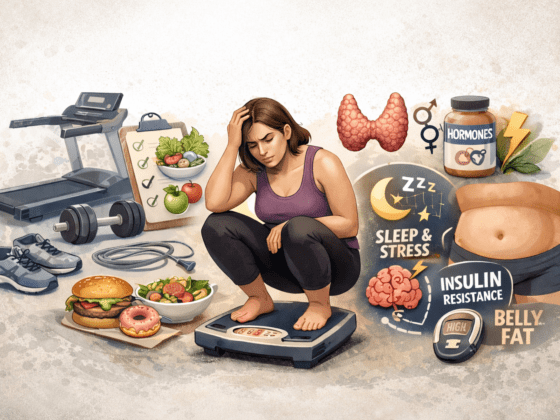
You’ve been doing sit-ups every day. You can feel your abs getting stronger — maybe even a bit sore. But the belly fat? Still there. Exactly where it was a month ago.
If that sounds familiar, you’re not doing anything wrong. You’ve just been given the wrong tool for the job. Sit-ups are real exercise, and they work — just not for the thing most people are using them for.
Sit-ups do not burn belly fat. No abdominal exercise does. Your body doesn’t pull fat from the area you’re working, no matter how many reps you do. This is the single most persistent myth in fitness, and understanding why it’s false will save you months of wasted effort.
Here’s exactly what’s happening, what actually moves belly fat, and how to put sit-ups to work the right way.
Why Sit-Ups Don’t Burn Belly Fat (The Actual Reason)
Sit-ups build and strengthen your abdominal muscles — but the fat sitting on top of those muscles is a completely separate system. When your body needs energy during exercise, it doesn’t draw fuel from the fat cells nearest to the muscles doing the work. It pulls from fat stores all over the body at once, based on your hormones, genetics, and overall energy balance.
This is called spot reduction — the idea that you can target fat loss in a specific area by exercising it. Decades of research have shown it doesn’t work that way.
A University of Massachusetts study had participants complete 5,000 sit-ups over 27 days and measured fat biopsies from their abdomens, buttocks, and upper backs before and after. The exercise reduced fat in all three areas equally — not just the abdomen where the work was being done.
Think of your body’s fat stores like a swimming pool. When your body burns fat for energy, it doesn’t just draw water from the corner of the pool where you happen to be splashing around. It lowers the water level of the entire pool evenly. Doing sit-ups tells your body to burn more energy overall — it has no say in where that energy comes from.
About 60% of fat distribution is genetic, so some of us lose more from one area than another — but that’s not because of the workouts we chose.
Doing sit-ups every day builds a stronger core. The fat above those muscles only moves when you’re burning more calories than you consume consistently — and that happens through your whole body, not one exercise.
What Sit-Ups Actually Do for Your Body
Here’s where most articles stop, leaving you with “sit-ups are useless.” That’s not true either, and throwing them out entirely is a mistake.
A strong core is responsible for far more than visible abs. Core muscles support your hips and pelvis, reduce back pain, improve balance, and build better posture — benefits that compound across everything else you do physically.
When you do sit-ups consistently, here’s what’s actually happening:
Your rectus abdominis — the “six-pack” muscle — gets thicker and stronger. This improves posture and reduces lower back strain for most people who sit for long periods.
Your transverse abdominis, the deep core muscle that wraps around your spine like a belt, gets trained. This is the muscle that holds everything in and protects your spine during lifting, twisting, and carrying.
Your overall calorie burn goes up slightly — though not dramatically. A moderate intensity 10-minute sit-up session burns around 60 calories. That’s real, just not the primary driver of fat loss.
The problem isn’t sit-ups. It’s the expectation that they’ll work on fat when they’re built for muscle.
What Actually Burns Belly Fat
Fat anywhere on your body — including your belly — comes down to one thing: being in a calorie deficit consistently over time. You need to burn more energy than you take in, and your body will pull from fat stores to make up the difference.
Exercise is one side of that equation, but not all exercise works equally.
Cardio moves the most calories per session
For people who are overweight or obese, research suggests aerobic exercise is best for reducing fat and body mass. Running, cycling, swimming, brisk walking, or HIIT workouts all burn significantly more calories per session than targeted ab exercises.
At least 150 minutes of aerobic exercise weekly is linked to meaningful reductions in waist circumference — that’s 30 minutes, five times a week, at a pace where you’re breathing hard but can still speak in short sentences.
Strength training builds the engine that burns fat all day
A study from Harvard School of Public Health found that men who did 20 minutes of strength training per day had less age-related belly fat compared to those who did cardio alone.
Why? Muscle is metabolically expensive. Every kilogram of muscle your body carries burns roughly 6–10 extra calories per day just to maintain itself — even while you’re sitting still. Build enough muscle and your resting calorie burn climbs meaningfully.
Strength training also triggers something called EPOC — your body keeps burning calories at an elevated rate for hours after the session ends. Cardio doesn’t do this nearly as much.
What actually works: combining both
A combined approach — cardio and strength training together — reduces belly fat more effectively than either method alone. The cardio burns calories during the workout; the strength training raises your baseline metabolism and protects your muscle while you’re in a deficit.
The formula for belly fat loss is simple, even if it’s not easy: consistent calorie deficit + cardio for calorie burn + strength training to preserve muscle. Sit-ups are a useful addition to that plan, not a replacement for it.
How to Use Sit-Ups the Right Way
Now that you know what sit-ups can and can’t do, here’s how they fit into a plan that actually works.
Keep them in — but as core training, not fat loss
Do sit-ups 3–4 times per week as part of a broader routine. Think of them as core maintenance, not fat removal. A strong core makes every other exercise more effective and reduces injury risk.
A good core routine (15–20 minutes, 3x per week):
- Sit-ups or crunches: 3 sets of 15–20 reps
- Planks: 3 sets of 30–45 seconds
- Leg raises: 3 sets of 12 reps
- Dead bugs: 3 sets of 10 reps per side
This trains all the abdominal muscles, not just the ones sit-ups hit.
Add cardio to create the calorie deficit
Start with 3 sessions per week of 25–30 minutes each. Walking counts — especially brisk walking at a pace that slightly elevates your breathing. If you’re comfortable with more intensity, HIIT workouts 2x per week are time-efficient and effective.
The key is consistency over intensity. Three moderate sessions every week beats one brutal session followed by four days of nothing.
Add full-body strength training
2–3 sessions per week of compound movements — squats, deadlifts, rows, presses — burns more calories than isolation exercises and builds the muscle that raises your resting metabolism.
You don’t need a gym. Bodyweight squats, push-ups, lunges, and resistance bands work if that’s what you have access to.
Fix the diet, because exercise alone rarely wins
You cannot out-exercise a consistently high-calorie diet. The most efficient path to belly fat loss is reducing intake slightly — around 300–500 calories below your maintenance level — while keeping protein high (1.6–2g per kg of bodyweight) to preserve muscle while you lose fat.
You don’t need to count every calorie forever. Building awareness of what you’re eating and roughly how much is usually enough to make meaningful progress.
How Long Does It Actually Take to Lose Belly Fat?
This depends on how much you have to lose and how consistently you execute, but realistic timelines look like this:
- Weeks 1–2: Water weight and bloat drops. The scale moves, but fat hasn’t shifted much yet.
- Weeks 3–8: With a consistent calorie deficit and exercise, you’ll start losing 0.5–1kg of actual fat per week. Belly fat begins reducing, though it may not be where your body loses first.
- Months 2–4: Visible changes in the belly area for most people who are consistent. This is when the core work you’ve been doing starts showing — because the fat layer above those muscles is finally thinning.
Belly fat, particularly visceral fat (the deep fat around your organs), does tend to respond well to consistent exercise and calorie deficit — often faster than fat in other areas like the thighs.
The belly fat you’re trying to lose responds to time-in-deficit, not number-of-sit-ups. The people who see results are the ones who stay consistent for 8–12 weeks, not the ones who work hardest for two weeks then stop.
Frequently Asked Questions
Do sit-ups burn belly fat? No. Sit-ups strengthen the abdominal muscles but do not remove the fat above them. Fat loss happens across your whole body in response to a calorie deficit — not in the specific area you’re exercising. This is why someone can have very strong abs that aren’t visible because a layer of fat sits over them.
How many sit-ups a day does it take to lose belly fat? No number of daily sit-ups will specifically lose belly fat. The body doesn’t pull fat from the area you’re exercising. What changes belly fat is a consistent calorie deficit combined with regular cardio and strength training — with sit-ups as part of your core routine, not your fat loss strategy.
Do crunches burn belly fat? No — crunches have the same limitation as sit-ups. They train your abdominal muscles effectively but cannot target fat removal in that area. Research consistently shows abdominal exercises alone do not produce greater belly fat loss than non-abdominal exercises with the same calorie burn.
Will sit-ups tone my stomach? Yes, but with an important caveat. Sit-ups will strengthen and develop your ab muscles, which does improve muscle tone. Whether that tone is visible depends on your body fat percentage — if there’s a significant fat layer above the muscle, toning the muscle beneath it won’t be visible until the fat comes down.
Are sit-ups good for weight loss? Sit-ups contribute a small amount to your total calorie burn, but they’re not an efficient weight-loss exercise. A 10-minute sit-up session burns roughly 60 calories. For the same time investment, a brisk walk or light jog burns significantly more. The best use of sit-ups in a weight-loss plan is as core training — not as your primary calorie-burning exercise.
Can I lose belly fat without doing sit-ups at all? Yes. Belly fat responds to calorie deficit and overall activity — not specifically to ab exercises. Plenty of people lose significant amounts of belly fat through cardio, strength training, and diet without a single sit-up. That said, core training has real benefits for posture, back health, and functional strength, so sit-ups are worth keeping in your routine.
What’s the fastest way to burn belly fat? The most effective approach is a moderate calorie deficit (300–500 calories below maintenance), 150+ minutes of cardio per week, and 2–3 strength training sessions. There is no faster shortcut that is sustainable. Belly fat responds to consistent effort over 8–12 weeks, not extreme short-term measures.
The Bottom Line
Sit-ups are a good exercise being asked to do the wrong job.
They build a stronger, more stable core — which matters for posture, back health, athletic performance, and every other exercise you do. But they cannot remove the fat sitting above those muscles, because no exercise can target a specific fat deposit.
Belly fat moves when you’re consistently burning more energy than you take in. The most effective path there is: enough cardio to create a real calorie deficit, strength training to build muscle that burns more fuel at rest, and a diet that keeps you slightly below maintenance.
Add sit-ups to that plan, and you’ll build the core that shows up once the fat comes down.
Sources
- University of Massachusetts (1984) spot reduction study — fat biopsies before/after 5,000 sit-ups over 27 days. Via Baptist Health South Florida
- Journal of Strength and Conditioning Research (2011) — abdominal exercise program did not achieve greater abdominal fat loss than control group. Via eMedicineHealth
- Harvard School of Public Health study on strength training and age-related belly fat. Via ProForm PT
- University of Sydney (2023) — randomised 12-week trial, no greater belly fat reduction from targeted vs general exercise. Via University of Sydney
- 2024 systematic review and meta-analysis (JAMA) — 150+ minutes aerobic exercise weekly linked to meaningful reductions in waist circumference. Via The Healthy
- Cleveland Clinic — Dr. Karen Cooper, DO, on sit-ups, core benefits, and belly fat. Via Cleveland Clinic Health Essentials