You know that sinking feeling when you eat breakfast at 8 AM and by 10 AM your stomach is growling like you haven’t eaten in days? I used to experience that every single day during my own weight loss journey.
After struggling with drug addiction in my twenties, fitness became my path to recovery. But even after getting clean and starting to work out regularly, I couldn’t understand why I was constantly hungry, constantly craving sugary snacks, and why the scale wouldn’t budge despite my best efforts.
The turning point came when I discovered that what I was eating for breakfast was sabotaging everything. I was starting my day with cornflakes and milk, thinking I was being healthy. In reality, I was setting myself up for blood sugar crashes, endless cravings, and a metabolism that was working against me instead of for me.
When I switched to high-protein breakfasts, everything changed. Within three weeks, the constant hunger disappeared. Within two months, I had lost 12 pounds while actually feeling more energized and satisfied. Now, as a certified Sports Science Nutritionist, I help others make the same transformation.
In this comprehensive guide, I’ll share everything science and real-world experience have taught me about high-protein breakfasts for weight loss. Whether you’re vegetarian, non-vegetarian, on a budget, or constantly rushing out the door in the morning, you’ll find practical strategies that actually work.
Why Protein at Breakfast Changes Everything for Weight Loss
Let’s start with the science behind why protein-packed mornings are game-changers for fat loss.
The Protein Advantage: What Science Says
Research consistently shows that eating adequate protein at breakfast delivers multiple weight loss benefits. One study found that people who consumed around 30 grams of protein at breakfast experienced significantly increased levels of GLP-1, the same hormone that weight loss medications like Ozempic mimic to control appetite.
Here’s what happens in your body when you start your day with protein:
1. Appetite Control That Lasts
Protein reduces levels of ghrelin, your hunger hormone, while boosting peptide YY and GLP-1, which signal fullness to your brain. This isn’t just about feeling full right after eating. Protein keeps you satisfied for hours, reducing the likelihood you’ll reach for those mid-morning cookies or chips.
2. Blood Sugar Stability
Unlike carbohydrate-heavy breakfasts that spike your blood sugar and then crash it hard, protein slows the release of glucose into your bloodstream. This means steady energy levels throughout the morning instead of the roller coaster ride that leaves you exhausted and craving sugar by 11 AM.
3. Increased Calorie Burn
Your body actually burns more calories digesting protein compared to carbs or fats. This is called the thermic effect of food. While your body uses only 5-10% of the calories from carbs and 0-3% from fats to digest them, protein requires 20-30% of its calories just to be processed. That means if you eat 100 calories of protein, your body effectively “sees” only 70-80 calories.
4. Muscle Preservation During Weight Loss
When you’re in a calorie deficit trying to lose weight, your body doesn’t just burn fat. It also breaks down muscle tissue for energy. But adequate protein intake, especially distributed throughout the day starting with breakfast, helps preserve that hard-earned muscle mass. This is crucial because muscle tissue burns more calories at rest than fat tissue does.
How Much Protein Should You Eat at Breakfast?
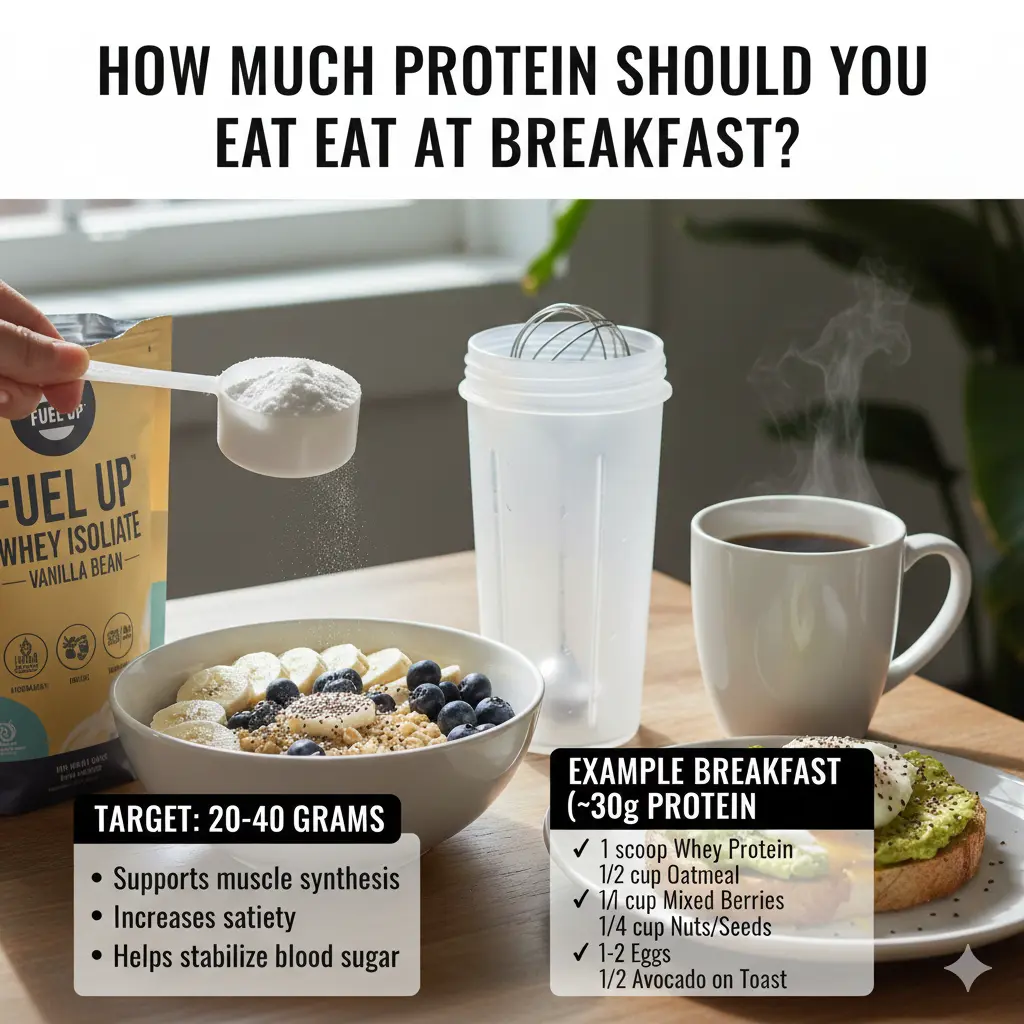
Based on current research and practical experience, here are the targets you should aim for:
For Weight Loss: 25-35 grams of protein at breakfast For Weight Maintenance: 20-25 grams of protein at breakfast For Muscle Building: 30-40 grams of protein at breakfast
To put this in perspective, one large egg contains about 6 grams of protein. So you’d need roughly 4-6 eggs (or equivalent protein from other sources) to hit that 25-35 gram target.
Common Breakfast Mistakes That Sabotage Weight Loss
Before we dive into what TO eat, let me share the mistakes I see people make constantly. I made most of these myself.
Mistake 1: The “Healthy” Cereal Trap
Marketing has convinced us that boxed cereals are a healthy breakfast choice. Even ones labeled “whole grain” or “high fiber” are often loaded with hidden sugars and provide minimal protein. You’ll be hungry again within two hours, guaranteed.
Mistake 2: Juice and Toast
This combination is basically pure sugar hitting your system first thing in the morning. Your blood sugar spikes, insulin rushes in, and within an hour or two you crash hard and crave more sugar. It’s a vicious cycle that makes weight loss nearly impossible.
Mistake 3: Skipping Breakfast Entirely
While intermittent fasting works for some people, many who skip breakfast end up overeating later in the day. Research shows that eating a substantial, protein-rich breakfast actually helps control total daily calorie intake better than skipping it.
Mistake 4: Fruit and Yogurt Only
Plain Greek yogurt is excellent. But when your entire breakfast is a small cup of flavored yogurt and some fruit, you’re not getting enough protein or calories to sustain you. You’ll be reaching for snacks before lunch.
Mistake 5: Not Preparing Ahead
Relying on willpower each morning to make a healthy breakfast is a setup for failure. When you’re rushed and hungry, you’ll grab whatever is easiest. Preparation is non-negotiable for success.
Building Your Perfect High-Protein Breakfast for Weight Loss Formula
Instead of giving you random recipes to follow blindly, let me teach you the formula. Once you understand this, you can create endless variations based on your preferences, budget, and available time.
The 3-Component Framework
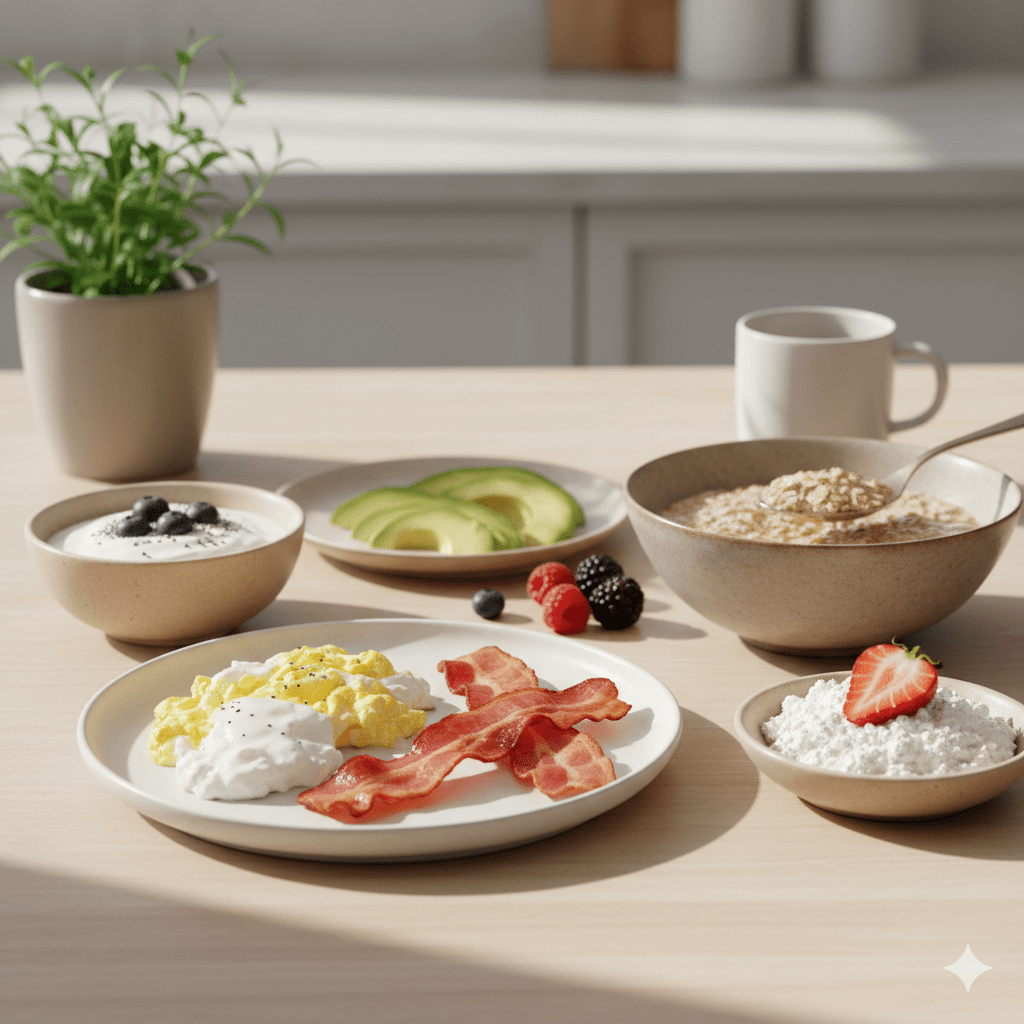
Every excellent high-protein breakfast should include:
Component 1: Primary Protein Source (20-30g protein)
- Eggs (2-3 whole eggs or 4-5 egg whites)
- Greek yogurt (1-1.5 cups)
- Cottage cheese (3/4 cup)
- Protein powder (1 scoop)
- Tofu or tempeh (150-200g)
- Lean meat (chicken breast, turkey, fish – 100-150g)
Component 2: Complex Carbohydrates (30-50g carbs)
- Oats (1/2 cup dry)
- Whole grain bread (1-2 slices)
- Sweet potato (1 medium)
- Quinoa (1/2 cup cooked)
- Brown rice (1/2 cup cooked)
Component 3: Healthy Fats & Fiber (5-15g fat)
- Avocado (1/4 to 1/2)
- Nuts (1 tablespoon)
- Seeds (1-2 tablespoons)
- Nut butter (1 tablespoon)
- Vegetables (unlimited – add as much as you want)
Optional: Flavor Enhancers (minimal calories)
- Spices and herbs
- Hot sauce
- Mustard
- Vinegar
- Lemon/lime juice
- Black coffee or green tea
Mix and match from each category to create hundreds of different breakfast combinations that never get boring.
20 High-Protein Breakfast Ideas That Actually Work
Now let’s put that formula into action with specific meal ideas. I’ve organized these by preparation time and included both vegetarian and non-vegetarian options with an Indian twist.
Quick Breakfasts (Under 10 Minutes)
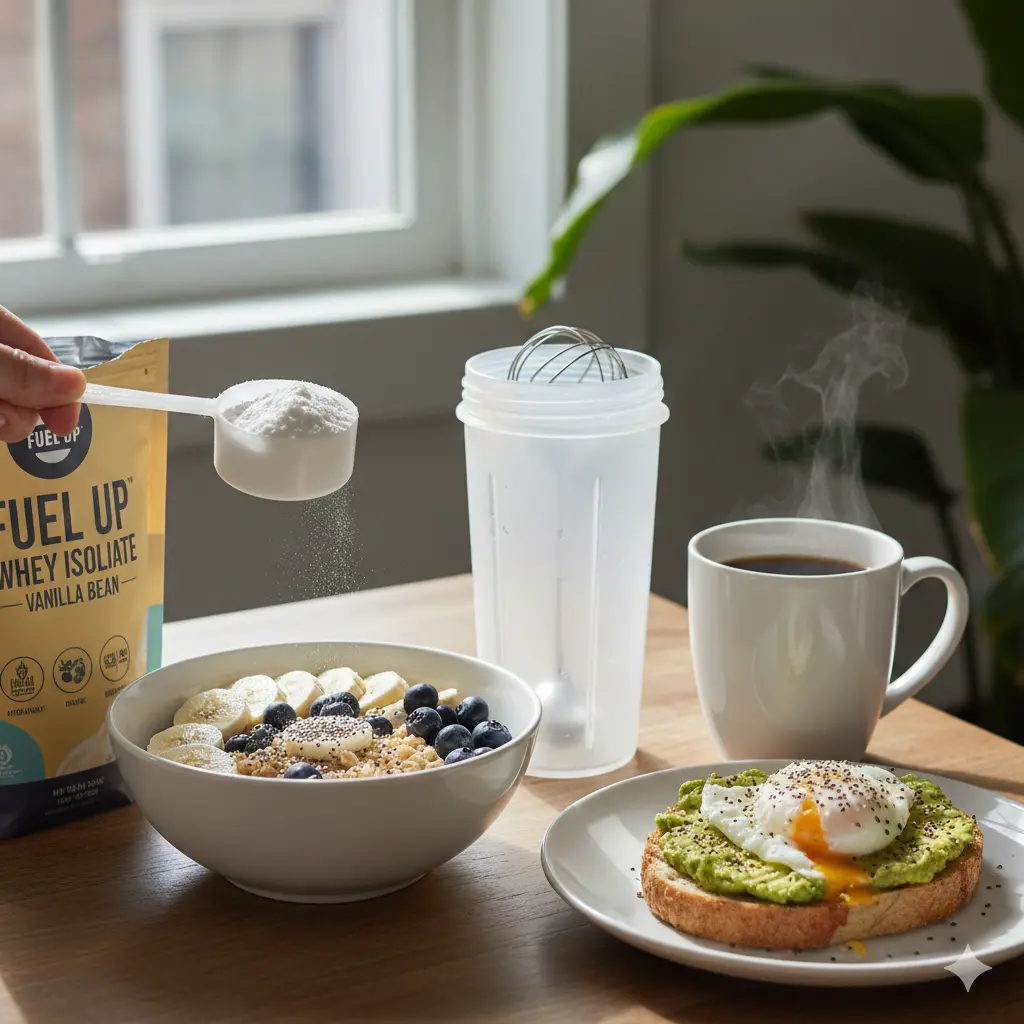
1. Protein-Powered Oats Cook 1/2 cup oats in water or milk. Stir in 1 scoop protein powder and top with 1 tablespoon almond butter and berries.
- Protein: 30g | Calories: 380 | Prep time: 7 minutes
2. Greek Yogurt Power Bowl 1.5 cups Greek yogurt + 2 tablespoons mixed seeds + 1/2 cup berries + a drizzle of honey
- Protein: 28g | Calories: 320 | Prep time: 3 minutes
3. Masala Scrambled Eggs 3 eggs scrambled with onions, tomatoes, green chilies, and turmeric. Serve with 1 slice whole grain toast.
- Protein: 22g | Calories: 300 | Prep time: 8 minutes
4. Paneer Bhurji 150g crumbled paneer sautéed with onions, tomatoes, and spices. Pair with 1 whole wheat roti.
- Protein: 25g | Calories: 350 | Prep time: 10 minutes
5. Protein Smoothie 1 scoop protein powder + 1 cup milk + 1 banana + 1 tablespoon peanut butter + ice
- Protein: 32g | Calories: 400 | Prep time: 5 minutes
6. Cottage Cheese Toast 2 slices whole grain bread toasted + 1/2 cup cottage cheese + sliced tomatoes + black pepper
- Protein: 24g | Calories: 280 | Prep time: 5 minutes
7. Dal Cheela (Lentil Pancake) Made from soaked and ground moong dal, cooked like a pancake with vegetables mixed in.
- Protein: 20g | Calories: 250 | Prep time: 10 minutes (if batter pre-made)
Make-Ahead Breakfasts (Prep Once, Eat All Week)
8. Egg Muffins Whisk 12 eggs with diced vegetables and cheese. Pour into muffin tins and bake at 350°F for 20-25 minutes. Makes 12 muffins.
- Per 2 muffins: Protein: 18g | Calories: 200
9. Overnight Protein Oats Mix 1/3 cup oats + 1 scoop protein powder + 1 cup milk + 1 tablespoon chia seeds. Refrigerate overnight.
- Protein: 35g | Calories: 420
10. Moong Dal Idli Fermented batter made from moong dal and rice. Steam in idli molds. Pair with coconut chutney.
- Per 3 idlis: Protein: 15g | Calories: 210
11. Quinoa Breakfast Bowl (Batch Prep) Cook quinoa in bulk. Each morning, reheat 1 cup quinoa + add 2 boiled eggs + vegetables + spices
- Protein: 25g | Calories: 380
12. Protein Pancakes (Freeze & Reheat) Blend 1 cup oats + 3 eggs + 1 scoop protein powder + 1 banana. Cook pancakes and freeze. Reheat in microwave.
- Per serving (3 pancakes): Protein: 30g | Calories: 350
Hearty Breakfasts (15-20 Minutes)
13. Vegetable Omelette 3-egg omelette filled with bell peppers, mushrooms, onions, and cheese. Serve with whole grain toast.
- Protein: 26g | Calories: 400
14. Chicken Sausage & Eggs 2 chicken sausages + 2 eggs + sautéed spinach + 1 slice whole grain toast
- Protein: 35g | Calories: 420
15. Tofu Scramble with Vegetables 200g crumbled tofu scrambled with turmeric, nutritional yeast, mixed vegetables, and spices
- Protein: 24g | Calories: 300
16. Poha with Peanuts (High Protein Version) Flattened rice cooked with extra peanuts (3 tablespoons), vegetables, and spices
- Protein: 15g | Calories: 320
17. Breakfast Burrito Whole wheat tortilla + 3 scrambled eggs + black beans + avocado + salsa
- Protein: 28g | Calories: 450
18. Salmon and Avocado Toast 100g smoked salmon + 1/4 avocado + 2 slices whole grain bread + poached egg
- Protein: 32g | Calories: 480
19. Besan Cheela (Chickpea Flour Pancake) Made from chickpea flour with vegetables and spices. Naturally high in protein.
- Per 2 cheelas: Protein: 18g | Calories: 280
20. Greek Yogurt Parfait Deluxe 1.5 cups Greek yogurt layered with 1/4 cup granola + 3 tablespoons nuts + berries + 1 tablespoon honey
- Protein: 32g | Calories: 480
Budget-Friendly High-Protein Breakfast Options
One misconception is that high-protein eating is expensive. Here are protein-rich breakfasts that won’t break the bank:
1. Egg Bhurji: Eggs are one of the cheapest protein sources. Three eggs cost less than ₹15 in most Indian cities.
2. Dal-Based Preparations: Moong dal, chana dal, and masoor dal are extremely affordable protein sources. Make cheelas, idlis, or simply cook dal with spices.
3. Peanut Butter & Banana Toast: Whole grain bread + 2 tablespoons peanut butter + sliced banana provides 15g protein for under ₹30.
4. Besan (Chickpea Flour) Dishes: Besan is inexpensive and versatile. Make cheelas, dhoklas, or add to scrambled eggs for extra protein.
5. Milk-Based Breakfasts: Plain milk with oats or upma made with extra milk provides good protein at low cost.
6. Boiled Eggs with Upma: 2 boiled eggs (12g protein) + vegetable upma (5g protein) = 17g protein for roughly ₹25.
Pro Tip: Buy protein powder when it’s on sale online. A 2kg tub typically provides 60+ servings and works out cheaper per serving than many whole food protein sources.
Meal Prep Strategies for Busy People
The difference between success and failure often comes down to preparation. Here’s how to make high-protein breakfasts effortless:
Sunday Prep Session (2 Hours)
What to Prepare:
- Boil 12-14 eggs (store in fridge, good for 1 week)
- Make egg muffins (12 count, freeze half)
- Prepare overnight oats (5 servings in jars)
- Cook a batch of quinoa or brown rice
- Wash and chop vegetables
- Make protein pancakes (freeze between parchment paper)
Daily Morning Routine (5 Minutes)
With your prep done, breakfast becomes:
- Reheat egg muffins (2 minutes in microwave)
- OR grab overnight oats from fridge
- OR pop protein pancakes in toaster
- Add fresh fruit or vegetables
- Pour coffee
Investment That Pays Off
Essential Meal Prep Tools:
- Glass meal prep containers (₹500-800)
- Muffin tin (₹300-500)
- Mason jars for overnight oats (₹600 for 6)
- Food scale (₹400-800)
- Good non-stick pan (₹800-1500)
Vegetarian & Vegan High-Protein Options
As someone from India, I understand that many of you prefer vegetarian or vegan options. The good news is that plant-based high-protein breakfasts are absolutely achievable.
Top Vegetarian Protein Sources for Breakfast
Paneer (Indian Cottage Cheese): 100g = 18g protein Greek Yogurt or Hung Curd: 1 cup = 20g protein Moong Dal: 1 cup cooked = 14g protein Chickpeas (Chana): 1 cup cooked = 15g protein Tofu: 150g = 15g protein Tempeh: 100g = 19g protein Quinoa: 1 cup cooked = 8g protein Oats: 1/2 cup dry = 5g protein Peanut Butter: 2 tablespoons = 8g protein Chia Seeds: 2 tablespoons = 4g protein Hemp Seeds: 3 tablespoons = 10g protein
Complete High-Protein Vegetarian Breakfasts
Paneer Scramble: 150g paneer + vegetables + 1 whole wheat roti = 25g protein
Dal and Dosa Combo: 2 dosas made with urad dal batter + 1 cup sambar = 18g protein
Sprouted Moong Salad: 1 cup sprouted moong + vegetables + lemon + 2 boiled eggs = 24g protein (or skip eggs for vegan, 12g protein)
Protein Smoothie Bowl: Blend 1 scoop plant-based protein powder + 1 banana + spinach + 1 tablespoon peanut butter. Top with granola and fruits = 28g protein
Tofu Bhurji: 200g tofu crumbled with onions, tomatoes, and spices + 1 whole wheat paratha = 23g protein
Tracking Progress: Beyond The Scale
When you switch to high-protein breakfasts, don’t just watch the number on the scale. Track these indicators too:
Week 1-2:
- Reduced mid-morning hunger
- Fewer cravings for sugary snacks
- More stable energy levels
- Better focus and concentration
Week 3-4:
- Clothes fitting more comfortably
- Visible fat loss (measure waist circumference)
- Improved strength in workouts
- Better sleep quality
Week 5-8:
- Significant weight loss (1-2 lbs per week is healthy)
- Muscle definition becoming visible
- Sustained energy throughout the day
- Breakfast has become a habit you enjoy
Common Questions Answered
Q: Can I have the same breakfast every day?
A: While you can, I don’t recommend it for two reasons. First, variety ensures you get a wider range of nutrients. Second, you’re more likely to stick with your plan long-term if you’re not bored. Aim for at least 4-5 different breakfast options you rotate through.
Q: What if I’m not hungry in the morning?
A: This is common, especially if you’re eating late at night. Try pushing your dinner earlier and keeping it lighter. If you genuinely aren’t hungry, start with something small like a protein smoothie and work your way up to more substantial meals. Your body will adjust.
Q: Is protein powder necessary?
A: Absolutely not. Protein powder is convenient and cost-effective, but whole food sources are perfectly adequate. I use protein powder about 3-4 times per week for convenience, but the rest of the time I rely on eggs, paneer, Greek yogurt, and dal.
Q: What about people with high cholesterol? Can they eat eggs daily?
A: Current research shows that for most people, dietary cholesterol (like from eggs) doesn’t significantly impact blood cholesterol levels. However, if you have specific health concerns, consult your doctor. You can also use more egg whites and fewer yolks, or focus on plant-based protein sources.
Q: How long before I see weight loss results?
A: Most people notice improved hunger control and energy within the first week. Visible weight loss typically starts showing up in weeks 2-4, assuming you’re also maintaining a calorie deficit overall. Remember, sustainable fat loss is about 0.5-1 kg per week.
Q: Can I eat high-protein breakfasts while intermittent fasting?
A: Yes! If you’re doing 16:8 intermittent fasting, break your fast with a high-protein meal. This gives you all the benefits of both approaches. The protein will help preserve muscle mass while you’re in a fasted state for part of the day.
The Long-Term Mindset
Here’s what I’ve learned from my own journey and from coaching hundreds of people: The most important thing isn’t finding the “perfect” breakfast. It’s finding what you can sustain for months and years.
A mediocre breakfast plan you can stick with will always beat a perfect plan you abandon after two weeks.
Start simple. Pick 2-3 breakfast options from this guide that seem doable for you. Master those. Once they become habits, add more variety. Don’t try to overhaul everything at once.
Remember, the goal isn’t just weight loss. The goal is becoming the kind of person who takes care of their health, makes good choices consistently, and feels energized and confident in their body.
High-protein breakfasts are just one tool in your toolbox. But they’re a powerful one. They set the tone for your entire day, giving you the energy, focus, and satiety to make better choices from sunrise to sunset.
Final Thoughts
When I was at my lowest point, struggling with addiction and feeling like I had no control over my life, fitness gave me something to focus on. But it was only when I understood the science of nutrition, particularly the power of starting my day right, that everything clicked into place.
You don’t need to be perfect. You don’t need to eat chicken breast and broccoli for breakfast every morning (unless you want to). You just need to make protein a priority, prepare ahead so you set yourself up for success, and stay consistent.
Your breakfast is the first decision you make for your health every single day. Make it a good one.
Now I want to hear from you. What’s been your biggest challenge with breakfast? Which of these high-protein options are you most excited to try? Drop a comment below and let’s continue this conversation.
And if you found this guide helpful, share it with someone who’s also working on their health goals. We’re all in this together.
Stay fit, stay strong.
Nikhil Certified Sports Science Nutritionist LiveFitNow.in
Related Articles You’ll Love:
- Best Protein Sources for Vegetarians in India
- Complete Meal Prep Guide for Weight Loss
- How I Lost 30 Pounds: My Complete Transformation Story
Disclaimer: This article is for educational purposes only. Always consult with a healthcare provider before making significant changes to your diet, especially if you have underlying health conditions or are taking medication.