Discover proven methods to lose 1-2 pounds of weight weekly without exercise through sleep hormone optimization, protein thermogenesis, and metabolic strategies.
270-350
calories reduced daily through sleep optimization
20-30%
of protein calories burned during digestion
350+
calories burned daily through NEAT optimization
How Sleep Optimization Creates 270+ Daily Calorie Deficits Through Hormone Regulation
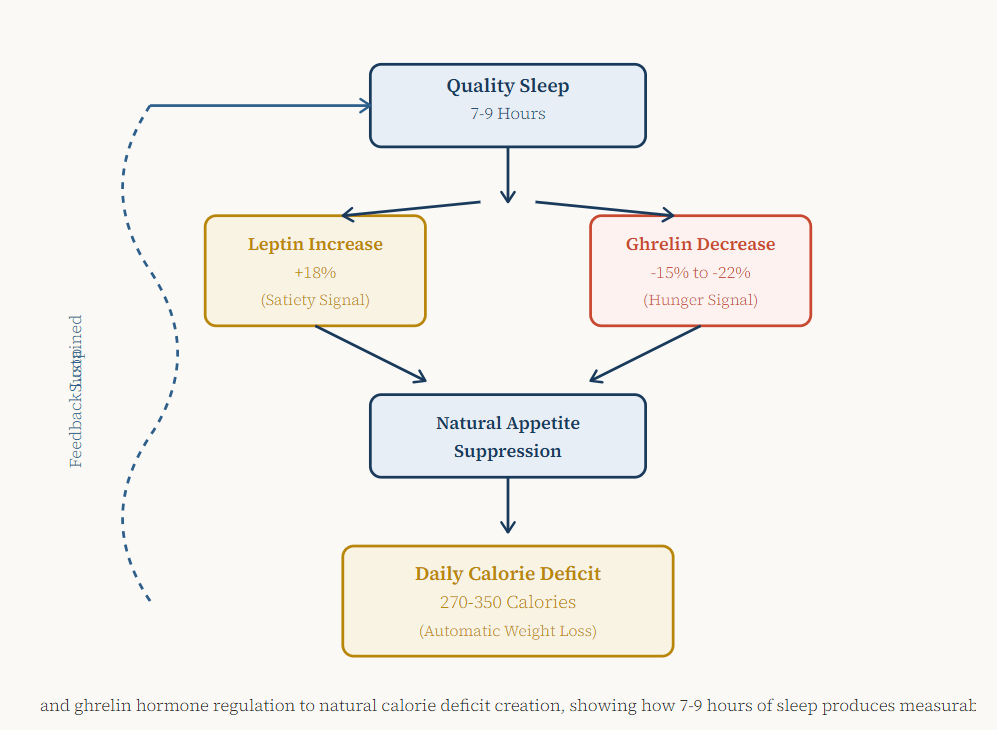
Quality sleep creates natural weight loss by regulating hunger hormones leptin and ghrelin, producing measurable calorie deficits of 270-350 calories daily through biological appetite suppression. Research demonstrates that 7-9 hours of quality sleep increases leptin by 18% while decreasing ghrelin by 15-22%, creating automatic appetite control without conscious restriction.
Sleep’s weight loss pathway operates through precise biochemical mechanisms that directly impact your daily calorie intake. When you achieve 7-9 hours of quality sleep, your body produces optimal levels of leptin, the satiety hormone that signals fullness to your brain. Simultaneously, adequate sleep suppresses ghrelin production, the hormone responsible for triggering hunger and food cravings.
The Leptin-Ghrelin Weight Loss Pathway functions as your body’s natural appetite control system. Leptin is produced by fat cells and travels to your hypothalamus to signal energy sufficiency. Ghrelin is released by your stomach when empty to stimulate appetite. Sleep deprivation disrupts this delicate balance, increasing ghrelin production by 15-22% and decreasing leptin sensitivity by up to 18%. This hormonal imbalance translates to consuming an additional 270-350 calories per day when sleep-deprived compared to well-rested individuals.
Quality Requirements Beyond Duration extend far beyond simply spending 7-9 hours in bed. Effective hormone regulation requires consistent sleep-wake times, adequate deep sleep phases, and minimal sleep fragmentation. Deep sleep phases are particularly crucial for leptin production and growth hormone release, which supports metabolic function. Quality indicators include falling asleep within 15 minutes, waking fewer than 2 times nightly, and feeling refreshed upon awakening.
Sleep Hygiene Protocol for Metabolic Enhancement involves creating conditions that optimize hormone-regulating sleep. This includes maintaining bedroom temperatures between 65-68°F to support natural circadian cooling. Eliminating blue light exposure 2 hours before bedtime preserves melatonin production. Establishing a consistent bedtime routine signals your body to prepare for sleep. Additionally, avoiding caffeine after 2 PM and large meals within 3 hours of bedtime prevents sleep disruption that compromises hormone regulation.
The Leptin-Ghrelin Weight Loss Pathway
This biological system operates through feedback loops between your fat cells, stomach, and brain to regulate energy balance and appetite throughout the day.
Quality Requirements Beyond Duration
Effective hormone regulation requires not just adequate sleep duration but specific sleep architecture including sufficient deep sleep phases and minimal fragmentation.
Sleep Hygiene Protocol for Metabolic Enhancement
Environmental and behavioral modifications that create conditions for hormone-optimizing sleep include temperature control, light management, and consistent timing.
Research shows that people who sleep 7-9 hours nightly consume 270-350 fewer calories per day compared to those getting less than 6 hours of sleep, creating automatic weight loss without dietary changes.
Why Protein’s Thermic Effect Burns 20-30% of Its Calories During Digestion
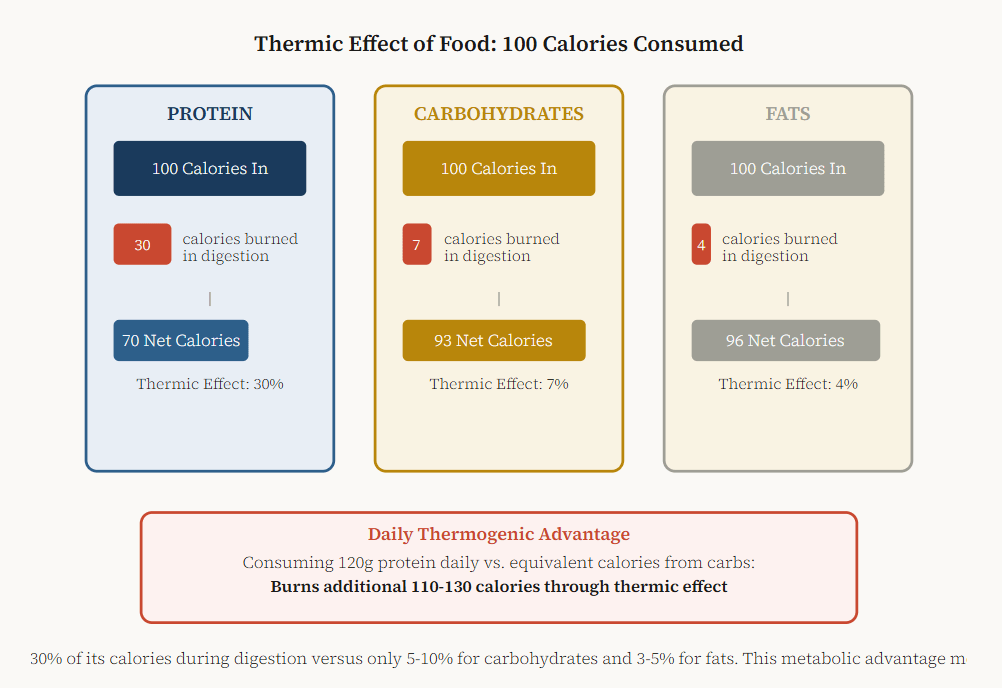
Protein creates automatic calorie burning through its thermic effect, where your body burns 20-30% of protein calories just to digest and process amino acids, compared to only 5-10% for other macronutrients. This metabolic advantage means 100 calories of protein provides only 70-80 net calories after accounting for digestion costs.
Protein’s thermogenic advantage represents the metabolic cost your body incurs to digest, absorb, transport, and store nutrients. Unlike carbohydrates or fats, protein requires significantly more energy for processing due to complex biochemical processes involved in amino acid metabolism. This creates a built-in calorie deficit through normal digestion, making each protein calorie less impactful than calories from other sources.
Metabolic Cost of Amino Acid Processing involves multiple energy-intensive steps that distinguish protein from other macronutrients. Your body must break down protein structures into individual amino acids, transport them across intestinal walls, convert them for various metabolic functions, and either utilize them for protein synthesis or convert excess amino acids to glucose through gluconeogenesis. Each biochemical transformation requires ATP energy expenditure, creating the substantial metabolic cost that burns 20-30% of protein’s calories during processing.
Strategic Protein Distribution Throughout the Day maximizes thermogenic benefits through consistent metabolic stimulation. Consuming 25-30 grams of protein per meal, spread across 3-4 meals, maintains elevated protein synthesis and thermogenesis rather than experiencing metabolic peaks and valleys. Morning protein intake proves particularly beneficial as it can increase thermogenesis for up to 6 hours post-meal, jumpstarting daily metabolic rate.
Calculating Your Thermogenic Protein Target requires determining optimal daily protein intake based on body weight and activity level. For sedentary individuals, consuming 0.8-1.2 grams per kilogram of body weight provides adequate protein for thermogenesis without excess that your body cannot efficiently utilize. A 150-pound person would need approximately 80-120 grams daily, potentially burning an additional 100-200 calories through thermic effect compared to equivalent calories from carbohydrates or fats.
Metabolic Cost of Amino Acid Processing
The complex biochemical pathways required to digest and utilize protein create energy expenditure that significantly exceeds the metabolic cost of processing other macronutrients.
Strategic Protein Distribution Throughout the Day
Optimized protein consumption patterns maximize thermogenic effects and maintain elevated metabolic rate through continuous amino acid processing demands.
Calculating Your Thermogenic Protein Target
Determining individual protein needs based on body weight and goals ensures optimal thermogenic benefits without exceeding metabolic capacity for protein utilization.
A 150-pound person consuming 100 grams of protein daily burns an additional 100-120 calories through thermic effect compared to consuming equivalent calories from carbohydrates or fats.
How Circadian Meal Timing Prevents Fat Storage and Optimizes Fat Burning
Your body’s natural hormone rhythms create specific windows where calories are more likely to be burned versus stored as fat, making meal timing a powerful tool for weight loss without exercise. Aligning meal consumption with circadian cortisol and insulin patterns can optimize when nutrients are utilized for energy versus stored as adipose tissue.
Natural circadian rhythms govern the release and sensitivity of key metabolic hormones including cortisol, insulin, and growth hormone throughout each 24-hour cycle. These predictable hormonal fluctuations create distinct windows where your metabolism favors fat burning versus fat storage, operating independently of total calorie intake.
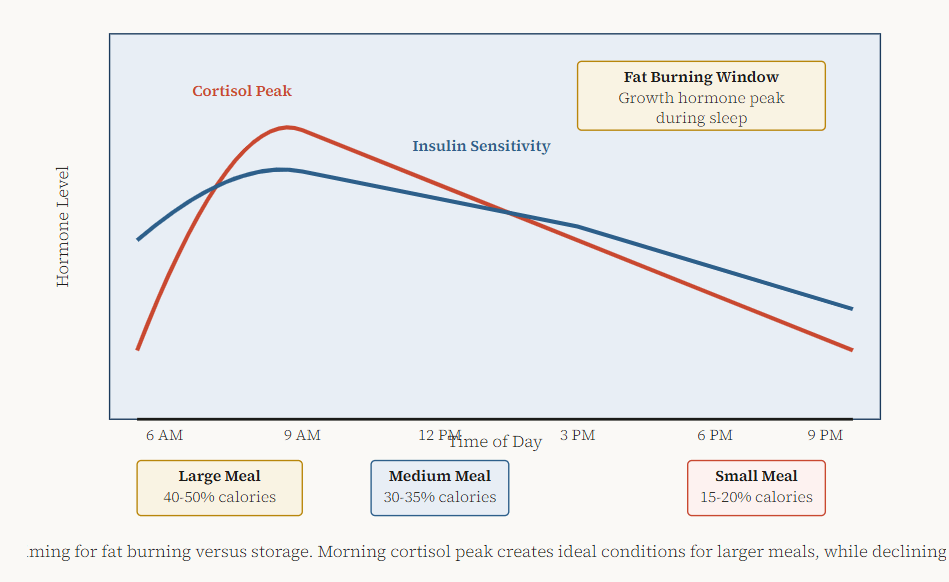
Understanding Daily Hormone Cycles reveals predictable patterns that influence nutrient partitioning throughout the day. Cortisol peaks naturally between 6-9 AM, enhancing glucose mobilization and insulin sensitivity during morning hours. This biological window creates optimal conditions for larger meals and carbohydrate consumption. Insulin sensitivity remains elevated through midday but begins declining in late afternoon and evening, while growth hormone release peaks during deep sleep phases, promoting overnight fat burning and muscle maintenance.
Optimal Eating Windows for Fat Loss leverage these natural hormone patterns to maximize metabolic efficiency. Front-loading 40-50% of daily calories during the morning cortisol peak maximizes nutrient utilization and metabolic rate. A moderate lunch during maintained insulin sensitivity prevents afternoon energy crashes while supporting sustained metabolism. Smaller evening meals align with declining insulin sensitivity and prepare the body for overnight fat burning during growth hormone release. This approach contrasts sharply with typical eating behaviors where the largest meals occur when hormone profiles favor fat storage.
Meal Composition by Time of Day should complement hormonal states for optimal metabolic outcomes. Morning meals can include higher carbohydrate content due to peak insulin sensitivity and cortisol-enhanced glucose utilization. Balanced macronutrients with adequate protein benefit midday meals for sustained energy. Evening meals should emphasize protein and vegetables while minimizing refined carbohydrates that could interfere with overnight fat burning and growth hormone release, setting the stage for effective stress management approaches.
Understanding Daily Hormone Cycles
Recognizing the natural 24-hour cycles of key metabolic hormones provides the foundation for strategic meal timing that supports fat loss over fat storage.
Optimal Eating Windows for Fat Loss
Consuming larger meals during peak insulin sensitivity and smaller meals during natural fat-burning windows maximizes metabolic efficiency and weight loss potential.
Meal Composition by Time of Day
Matching macronutrient ratios to circadian hormone patterns optimizes nutrient utilization and prevents calories from being preferentially stored as fat.
Eating your largest meal during the morning cortisol peak (6-9 AM) when insulin sensitivity is highest can improve nutrient utilization and prevent evening fat storage.
What Stress Management Protocols Reduce Cortisol-Driven Fat Storage
Chronic stress elevates cortisol, which forces your body to store 200-400 calories as abdominal fat daily regardless of your diet, making stress management essential for non-exercise weight loss. Elevated cortisol triggers preferential fat storage in the abdominal region and disrupts normal metabolic processes that regulate energy utilization.
Beyond meal timing, chronic stress creates a cascade of hormonal changes that directly interfere with weight loss efforts through cortisol-mediated metabolic alterations. Unlike acute stress responses that can temporarily boost metabolism, persistent stress maintains chronically elevated cortisol levels that fundamentally alter how your body processes and stores calories.
Cortisol’s Multi-Path Fat Storage Mechanism operates through several interconnected pathways that bypass normal metabolic controls. Elevated cortisol increases appetite, particularly for high-calorie, high-sugar foods through interactions with brain reward pathways. Simultaneously, cortisol promotes the differentiation of pre-fat cells into mature fat cells, particularly targeting the visceral abdominal region. This process occurs independent of calorie intake, meaning stress can cause fat accumulation even during calorie restriction. Cortisol also impairs insulin sensitivity, leading to higher insulin levels that further promote fat storage and prevent fat burning.
Evidence-Based Stress Reduction Techniques that measurably reduce cortisol levels include specific meditation practices, controlled breathing exercises, and progressive muscle relaxation protocols. Mindfulness-based stress reduction practiced for 20-30 minutes daily can reduce cortisol levels by 15-25% within 8 weeks. Deep breathing exercises using a 4-7-8 pattern (inhale for 4 seconds, hold for 7, exhale for 8) activate parasympathetic nervous system responses that counteract cortisol production. Regular massage therapy, even self-massage techniques, can reduce cortisol by up to 30% while increasing serotonin and dopamine levels.
Monitoring Cortisol Impact helps track the effectiveness of stress management interventions and identifies when professional help may be needed. Physical indicators of elevated cortisol include difficulty losing weight despite calorie restriction, increased abdominal fat storage, disrupted sleep patterns, and persistent fatigue. Cortisol levels can be assessed through saliva tests that measure free cortisol throughout the day, revealing whether circadian cortisol patterns are disrupted by chronic stress. Behavioral markers include increased cravings for sugary foods, emotional eating episodes, and difficulty feeling satisfied after meals, highlighting the connection between stress management and the daily movement patterns that optimize metabolism.
Cortisol’s Multi-Path Fat Storage Mechanism
Chronic stress creates hormonal changes that promote fat storage regardless of calorie intake, particularly targeting the abdominal region through cortisol-mediated mechanisms.
Evidence-Based Stress Reduction Techniques
Specific meditation, breathing, and relaxation practices that have been proven to reduce cortisol levels and improve metabolic function for weight management.
Monitoring Cortisol Impact
Physical and behavioral indicators that help identify when stress is interfering with weight loss efforts and track improvement with stress management interventions.
Chronic stress can force your body to store 200-400 calories as fat daily through elevated cortisol, potentially preventing weight loss even with perfect diet and exercise habits.
How NEAT Optimization Burns 350+ Calories Daily Without Formal Exercise
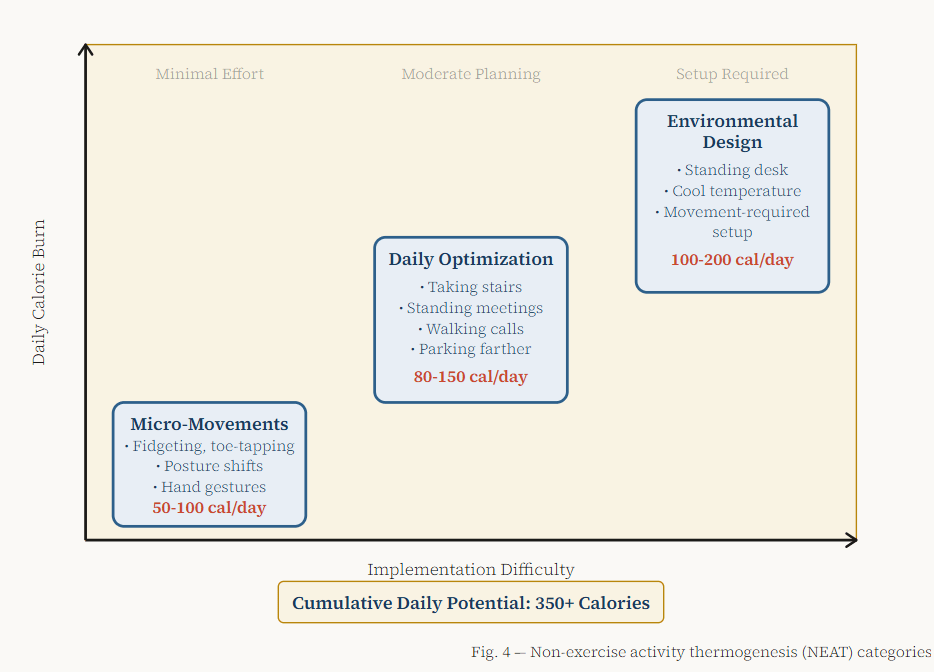
Non-exercise activity thermogenesis (NEAT) through small movements, posture changes, and fidgeting can burn over 350 calories daily, creating significant weight loss without formal exercise. NEAT encompasses all energy expenditure from activities that are not sleeping, eating, or formal exercise, representing a substantial portion of daily calorie burn in sedentary individuals.
Complementing stress reduction strategies, non-exercise activity thermogenesis (NEAT) represents the energy cost of all activities that are not sleeping, eating, or sports-like exercise, including maintaining posture, fidgeting, and small voluntary movements. Research demonstrates remarkable individual variations in NEAT, with some people burning 350+ calories more per day than others through unconscious movement patterns alone.
Physiological Mechanisms Behind NEAT involve multiple biological systems that generate heat and consume energy through muscle contractions, postural adjustments, and metabolic processes. Fidgeting behaviors like toe-tapping, finger drumming, and shifting in chairs activate muscle fibers that consume ATP for contraction. Postural muscles continuously work against gravity to maintain body position, with standing requiring significantly more energy than sitting. Even subtle movements like gesturing during conversation or maintaining alertness involve neural activity and muscle tension that contribute meaningfully to energy expenditure.
Micro-Movement Strategies for Sedentary Workers can dramatically increase daily energy expenditure through strategic behavioral modifications. Using a standing desk for 3-4 hours daily burns approximately 144 additional calories compared to sitting throughout the workday. Setting hourly movement alarms to perform 2-3 minutes of stretching or pacing can add 50-80 calories throughout an 8-hour period. Replacing traditional chairs with exercise balls engages core muscles for postural stability, burning an additional 6 calories per hour. Taking phone calls while standing or pacing, consistently using stairs instead of elevators, and parking further from destinations create cumulative calorie expenditure that adds up significantly over time.
Environmental Design for Passive Calorie Burn leverages thermogenesis and involuntary movement responses to increase energy expenditure without conscious effort. Maintaining ambient temperatures slightly cooler (68-70°F) forces your body to generate heat through muscle contractions and brown fat activation, burning an additional 100-200 calories daily. Using smaller plates and utensils naturally increases the number of bites and hand movements required for meals. Arranging your environment to require more movement—placing water across the room, using restrooms on different floors, keeping frequently used items in locations that require reaching or walking—creates dozens of small energy expenditures that accumulate throughout the day, building the foundation for recognizing when metabolic issues may need professional attention.
Physiological Mechanisms Behind NEAT
The biological processes by which small movements, posture maintenance, and fidgeting behaviors consume significant amounts of energy through muscle activation and metabolic activity.
Micro-Movement Strategies for Sedentary Workers
Practical techniques for incorporating energy-burning activities into desk work and sedentary routines without disrupting productivity or requiring gym time.
Environmental Design for Passive Calorie Burn
Changes to physical environment and daily setup that automatically increase energy expenditure through thermogenesis and increased movement requirements.
Studies show that naturally lean individuals burn up to 350 more calories daily through NEAT activities like fidgeting and spontaneous movement compared to obesity-prone individuals.
When Hormonal Issues Block Weight Loss and How to Address Them
Hormonal imbalances like thyroid dysfunction, leptin resistance, or chronically elevated cortisol can prevent weight loss despite perfect diet and lifestyle, requiring specific identification and treatment protocols. These metabolic barriers often present with characteristic symptoms that distinguish them from simple calorie balance issues.
Despite optimizing NEAT and other metabolic factors, hormonal dysfunction can completely override calorie deficits and metabolic optimization efforts, making weight loss impossible regardless of dietary compliance or lifestyle modifications. Recognizing when hormonal issues are the primary barrier enables appropriate intervention strategies and medical evaluation rather than continued frustration with ineffective approaches.
Recognizing Metabolic Roadblocks requires identifying patterns that suggest hormonal interference with normal weight loss mechanisms. Persistent weight loss plateaus despite documented calorie deficits may indicate metabolic adaptation or hormone resistance that goes beyond normal physiology. Rapid weight regain following successful weight loss often signals leptin resistance or thyroid suppression that undermines long-term maintenance. Preferential fat storage in specific body regions—such as abdominal accumulation with normal limb composition—suggests cortisol excess or insulin resistance. Weight loss that occurs only with extreme calorie restriction but halts with any increase in intake may indicate suppressed metabolic rate from thyroid dysfunction.
Thyroid and Leptin Dysfunction Symptoms present distinct patterns that help differentiate these conditions from normal weight loss challenges. Thyroid dysfunction manifests through persistent fatigue despite adequate sleep, cold intolerance that others don’t experience, dry skin and hair changes, chronic constipation, unexplained depression, and weight gain or inability to lose weight despite appropriate efforts. Leptin resistance presents as persistent hunger despite adequate food intake, intense cravings for high-calorie foods, inability to feel satisfied after normal meals, and rapid weight regain after successful weight loss attempts. Both conditions can develop gradually and coexist, making symptoms easy to dismiss as normal stress or aging responses.
Criteria for Medical Evaluation depend on symptom severity and response to comprehensive metabolic optimization efforts. Professional evaluation becomes necessary when implementing sleep optimization, stress management, and metabolic strategies for 8-12 weeks produces no measurable weight loss or symptom improvement despite documented compliance. Comprehensive laboratory testing should include complete thyroid panels (TSH, Free T3, Free T4, Reverse T3), fasting insulin and glucose for insulin resistance assessment, 24-hour cortisol rhythm testing, and leptin levels to identify specific dysfunction patterns. Individuals with family history of thyroid disease, autoimmune conditions, or metabolic disorders should consider earlier evaluation when experiencing multiple concerning symptoms that impact quality of life.
Recognizing Metabolic Roadblocks
Identifying patterns and symptoms that suggest hormonal dysfunction is preventing normal weight loss responses to calorie deficits and lifestyle modifications.
Thyroid and Leptin Dysfunction Symptoms
Specific symptom clusters that help identify when thyroid dysfunction or leptin resistance may be blocking weight loss efforts despite proper metabolic strategies.
Criteria for Medical Evaluation
Guidelines for determining when professional medical assessment and laboratory testing are needed to identify and address hormonal barriers to weight loss.
If you experience persistent fatigue, cold intolerance, and inability to lose weight despite consistent efforts for 8-12 weeks, thyroid dysfunction or leptin resistance may require medical evaluation.
The Bottom Line
Lose weight without exercise is not only scientifically proven but can be remarkably effective when you understand and leverage your body’s natural metabolic mechanisms. By optimizing sleep quality to regulate hunger hormones, strategically consuming protein to maximize thermogenesis, timing meals with circadian rhythms, managing stress to prevent cortisol-driven fat storage, and incorporating NEAT activities throughout your day, you can create substantial calorie deficits totaling 720-900+ calories daily. These combined approaches can produce healthy weight loss of 1-2 pounds per week without setting foot in a gym. The key to success lies in consistent implementation of these evidence-based strategies while monitoring for potential hormonal barriers that may require medical attention. Remember that sustainable weight loss is a biological process, not simply a mathematical equation, and working with your body’s natural systems rather than against them provides the foundation for long-term success. Start with sleep optimization as your foundation, add protein thermogenesis strategies, implement circadian meal timing, develop stress management practices, and increase daily NEAT activities to create a comprehensive metabolic approach that supports effortless, sustainable weight loss.
Frequently asked questions
How much weight can you realistically lose per week without exercise?
You can realistically lose 1-2 pounds per week through metabolic optimization without exercise. Sleep hormone regulation creates 270-350 calorie daily deficits, protein’s thermic effect burns an additional 100-200 calories, stress management prevents 200-400 calories of cortisol-driven fat storage, and NEAT optimization can burn 350+ calories daily. Combined, these mechanisms can create 720-900+ calorie daily deficits, supporting healthy weight loss rates of 1-2 pounds weekly.
Does the thermic effect of protein work if you have a slow metabolism?
Yes, protein’s thermic effect works regardless of baseline metabolic rate because it represents the inherent energy cost of amino acid processing, not additional metabolic capacity. Even individuals with slower metabolisms still burn 20-30% of protein calories during digestion compared to 5-10% for carbohydrates and fats. This creates a relative metabolic advantage that provides automatic calorie burning through normal digestive processes, making it particularly valuable for those with lower baseline metabolic rates.
Can poor sleep completely prevent weight loss even with perfect diet?
Yes, chronic sleep deprivation can completely prevent weight loss even with calorie restriction by disrupting leptin and ghrelin regulation. Poor sleep increases ghrelin by 15-22% and decreases leptin sensitivity by 18%, creating hormonal signals that override conscious dietary efforts. Additionally, sleep deprivation elevates cortisol levels, promotes fat storage, and reduces insulin sensitivity, making it nearly impossible to lose weight sustainably regardless of dietary compliance.
What are the warning signs that hormones are blocking your weight loss?
Key warning signs include persistent fatigue despite adequate sleep, inability to lose weight despite documented calorie deficits for 8+ weeks, rapid weight regain after successful weight loss, preferential abdominal fat storage, constant hunger despite adequate food intake, and cold intolerance. These symptoms suggest thyroid dysfunction, leptin resistance, or cortisol excess that may require medical evaluation and specific treatment protocols beyond standard metabolic optimization approaches.
How long does it take to see results from metabolic optimization methods?
Initial results from metabolic optimization typically appear within 1-2 weeks, with sleep hormone improvements showing appetite changes within 3-5 days of consistent quality sleep. Protein thermic effects are immediate with each meal, while stress management benefits usually become noticeable within 2-3 weeks of consistent practice. Full metabolic adaptation and optimal hormone regulation typically develops over 6-8 weeks of consistent implementation, with maximum weight loss rates achieved during weeks 3-8.
Is it possible to maintain muscle mass while losing weight without exercise?
Yes, maintaining muscle mass during non-exercise weight loss is possible through adequate protein intake (25-30% of calories), which provides amino acids for muscle protein synthesis while creating thermogenic calorie burn. The key is ensuring gradual weight loss of 1-2 pounds weekly rather than rapid weight loss that promotes muscle breakdown. Additionally, NEAT optimization and daily movement activities help maintain muscle activation and prevent the muscle loss typically associated with sedentary calorie restriction.
Do these hormonal weight loss methods work for people over 50?
These metabolic approaches are often more effective for people over 50 because age-related hormonal changes make traditional exercise-based weight loss more challenging. Sleep optimization becomes increasingly important as aging affects sleep quality and hormone production. Protein’s thermic effect provides particular benefits as metabolic rate naturally declines with age. However, individuals over 50 may need medical evaluation for thyroid function and hormone levels that commonly change during menopause and andropause.
Can you combine intermittent fasting with these metabolic approaches?
Yes, intermittent fasting can enhance these metabolic approaches when properly aligned with circadian rhythms. Time-restricted eating that concentrates meals during morning and midday hours leverages natural cortisol and insulin patterns while maintaining the sleep-fasting cycle needed for growth hormone release and fat burning. However, fasting should not compromise sleep quality or increase stress levels, as these would counteract the hormonal benefits. The key is ensuring fasting windows support rather than disrupt natural metabolic rhythms.